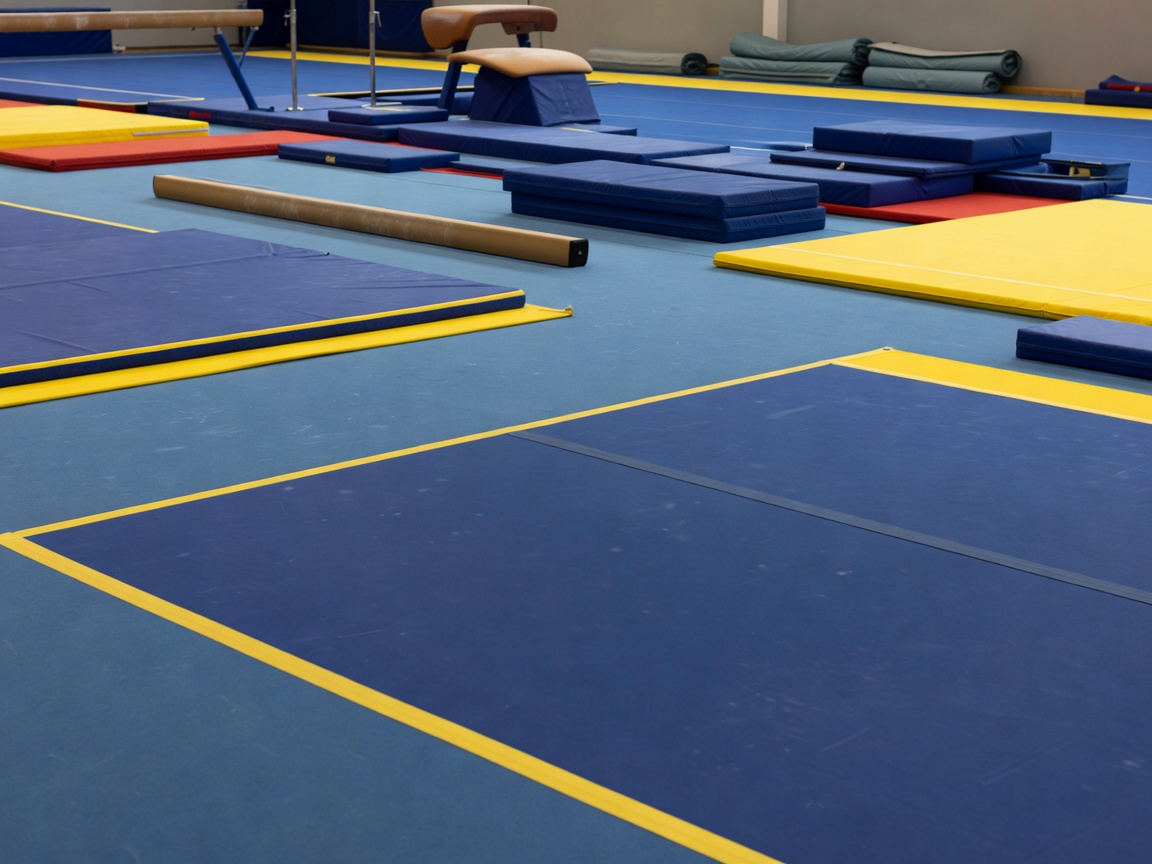
Follow the route, not the biggest skill
Walk the intended visitor route with a member of staff. Look for the distinction between active apparatus, waiting positions, preparation areas and general circulation. A route that seems obvious in an empty hall may look very different when groups change over. Ask whether your visit reflects a typical session and whether other activities share the space.
Notice how athletes reach the trampoline and leave it after a turn. You are not assessing technique; you are trying to understand whether movement around the apparatus is organised and explained. Bags, water bottles and spectators should have an agreed place. If you cannot tell where visitors are permitted, ask rather than stepping closer for a better view.
Separate equipment questions from assumptions
Competitive trampoline, tumbling and double mini-trampoline are related disciplines, but their apparatus and training arrangements differ. A programme may concentrate on one discipline or offer several. Ask exactly which activities the advertised pathway includes and which parts of the hall are used for each.
The Fédération Internationale de Gymnastique, commonly known as FIG, publishes rules and apparatus norms relevant to international competition. These are useful reference documents, not a visitor’s shortcut to certifying a facility. Local requirements, federation guidance, equipment instructions and the actual training use all matter. Do not infer that an academy meets a particular standard because a photograph resembles an international event.
Useful questions include who is responsible for inspection, how concerns about equipment are reported and what happens when an item is taken out of use. Ask staff to explain their process rather than requesting access to apparatus, service records containing personal details or restricted areas. A clear account of responsibility is more informative than a vague statement that everything is “professional standard.”
Observe supervision in context
Count neither coaches nor athletes in isolation. A headcount cannot establish whether supervision is appropriate without knowing the activity, participant needs, qualifications and applicable guidance. Instead, ask who leads the session, who covers other groups and how responsibility is transferred during a break or staff change.
Listen for understandable instructions about starting, stopping and waiting. Notice whether an athlete can get a coach’s attention without entering an active area. These observations do not predict an individual outcome, but they give you concrete subjects for a conversation. Avoid distracting coaches while they are supervising; agree a separate time for questions.
Read light, sound and shared space
A bright photograph cannot tell you how a hall feels throughout the day. Ask about changing daylight, artificial lighting, temperature and ventilation during the sessions you would actually attend. Sound also matters: several groups training together may make verbal communication harder to follow. Staff should be able to describe how instructions remain clear in that setting.
Accessibility deserves the same practical attention. Consider the route from the entrance, toilets, changing spaces and spectator arrangements, not only the activity floor. Explain any access requirements in advance and ask what can be accommodated. An accessible entrance alone does not answer every participation question.
End with a routine you can describe
Before leaving, try to summarise the session journey: arrival, preparation, supervised turns, rest and departure. If a stage remains unclear, ask about it. Check how attendance is recorded, how parents receive updates and what happens if a session ends early. These ordinary details connect the physical hall to the people responsible for it.
This guide supports observation and questions. It is not a facility inspection, a safety certification or instruction for using trampoline apparatus. Follow staff directions and never enter an active training area without permission.